

For years, the AI industry was obsessed with one thing: making models smarter. Bigger datasets, larger context windows, faster benchmarks. But this week’s news suggests the focus is shifting again.
This next phase feels less experimental. AI is slowly moving from standalone tools into the core workflows companies rely on every day.
Google launches AI threat defense system
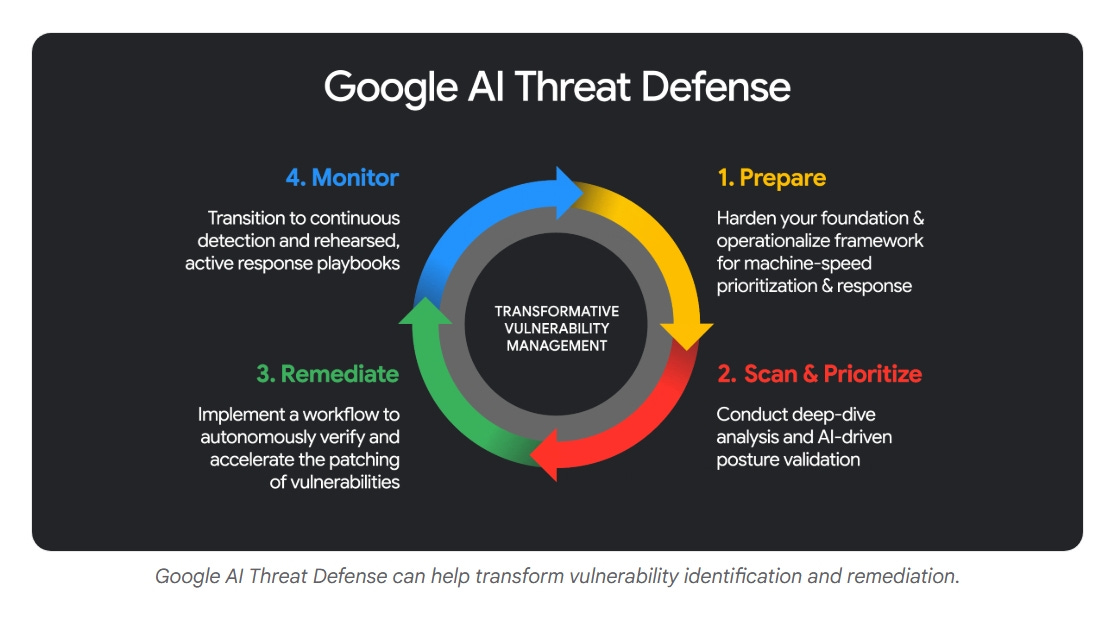
Google Cloud just rolled out a new AI-powered threat defense platform built to help companies detect and stop cyberattacks faster.
The system uses Gemini AI across Google’s security products to:
automate investigations
analyze malware
identify hidden attack paths
visualize how threats spread across cloud systems
generate real-time summaries and recommendations using intelligence from Google’s Mandiant team
Google says the goal is to reduce pressure on security teams as attacks become more complex.
The bigger trend: cybersecurity is becoming one of AI’s biggest real-world use cases.
Product Update
Claude Opus 4.8 is built to say “I don’t know”
Anthropic just launched Claude Opus 4.8, the newest version of its flagship AI model, with a focus that stands out from the rest of the industry: honesty.
The company says Opus 4.8 is much better at admitting uncertainty, avoiding unsupported claims, and saying “I don’t know” instead of confidently making things up.
That matters more than it sounds. Most top AI models today are getting better at coding, reasoning, and agent-style tasks, but hallucinations are still a major problem across OpenAI, Google, and Meta systems.
It also shows where the AI race is heading: OpenAI is pushing speed and agents, Google is building AI into its ecosystem, and Anthropic is positioning Claude as the more reliable option for serious work.
If AI becomes part of everyday workflows, trust may end up mattering as much as raw capability.
Watch the launch video:
Anthropic Is Now Chasing OpenAI’s Throne
Anthropic has raised $65 billion in Series H funding, led by investors including Altimeter Capital, Dragoneer, Greenoaks, and Sequoia Capital, valuing the company at a reported $965 billion post-money.
That puts the Claude maker close to OpenAI, which was reportedly valued at around $1 trillion earlier this year.
Anthropic, backed by Amazon and Google, has been growing quickly as more companies adopt Claude for coding, research, and internal AI workflows. The company’s annualized revenue has also surged as enterprise AI spending keeps accelerating.
Instead of competing for consumer hype, OpenAI and Anthropic are increasingly competing for something much bigger: becoming the AI system companies build their daily work around.
Wix cuts 20% of staff as AI reshapes workflows
Wix is laying off around 1,000 employees, roughly 20% of its workforce, as the company restructures around AI. CEO Avishai Abrahami said the move reflects “the fast evolution of AI capabilities.”
In an internal memo later shared on X, Abrahami described AI as the biggest shift in software since modern programming languages. Wix is flattening management layers while hiring for new AI-focused roles and workflows.
The bigger takeaway: Companies are now restructuring teams, management layers, and workflows around what AI can automate — and that shift could reshape how modern tech companies are built. Read More →

Worth a Try AI Tools
Runway MCP
Runway has launched MCP support, letting users generate high-quality images and videos directly inside tools like Claude, ChatGPT, and Cursor.
It supports models including Seedance 2.0, GPT Image 2, Kling, Nano Banana Pro, and Gen-4.5 without leaving your workflow.
Why try it?
It turns AI image and video generation into a native part of your workspace instead of a separate app.
ElevenLabs Music v2
ElevenLabs introduced Music v2, a new AI music model built for longer, more dynamic compositions.
The model can shift between genres like opera and heavy metal in a single track, handle fast rap and dense lyrics, and even blend sound effects directly into the music without losing coherence.
Why try it?
It feels less like looped AI music and more like an actual evolving soundtrack.
Also Read
📹 Google dropped a massive library of short AI-generated clips from I/O 2026. Read More
🪙 AI tokens could soon trade like oil or gold - turning compute power into a whole new financial market. Read More
📈 SK Hynix just crossed the $1 trillion market cap milestone as demand for AI memory chips keeps exploding. Read More
🤝 Asana is acquiring StackAI to bring cross-system AI agent execution directly into workplace workflows. Read More
💻 Microsoft is reportedly preparing to release a new coding-focused AI model next week. Read More
🎞️ Amazon is building its own AI production pipeline and has already approved three AI-animated Prime Video series. Read More
🌍 OpenAI’s new Economic Futures initiative explores how AI could reshape jobs, productivity, and economic systems. Read More
Before You Go
This week made one thing clear: the AI race is shifting beyond who has the smartest model. It’s becoming about who can build systems people actually trust and rely on every day.
As AI moves deeper into work, security, and decision-making, what will matter more in the long run - capability, or trust?