

AI is getting cheaper, more specialized, and more operational.
This week showed how quickly AI tools are moving from experimentation into real infrastructure for companies, security teams, and even solo operators.
This Week in Numbers
$2B raised by Moonshot AI
71.4% cyber benchmark pass rate for GPT-5.5 Cyber
47 businesses/month run by one AI-powered solo operator
510M daily active users on Snap
China’s Open-Source AI Push Gets $2B Bigger
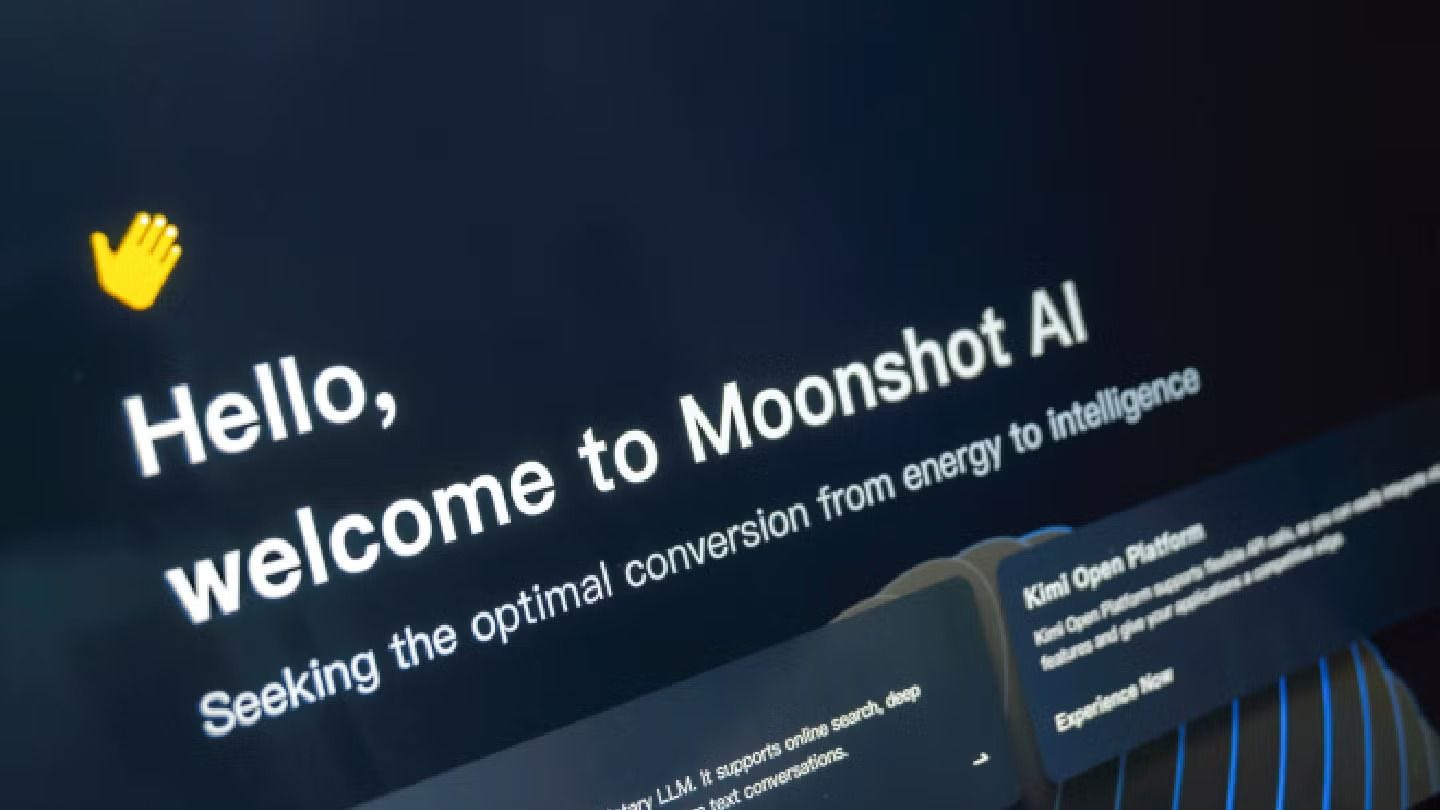
Chinese startup Moonshot AI has raised $2 billion at a $20 billion valuation. Backed by Alibaba, the company is best known for its chatbot Kimi, which gained popularity in China for handling long-context prompts and document-heavy workflows.
The funding comes as demand for open-source AI models accelerates globally. Chinese AI labs are increasingly positioning themselves as lower-cost alternatives to OpenAI and Anthropic, particularly for enterprises seeking more flexibility and less dependence on US ecosystems.
The result is an increasingly split AI landscape: the US continues to dominate closed frontier models, while China scales through open-source adoption and regional infrastructure control.
OpenAI’s New Cyber Model Solves Tasks in Minutes
OpenAI has introduced GPT-5.5 Cyber, a cybersecurity-focused model now available to vetted defenders and security researchers. The system is designed for workflows including malware analysis, vulnerability triage, reverse engineering, and incident response.
The model operates through OpenAI’s new Trusted Access for Cyber program, which gives approved teams expanded capabilities for legitimate defensive work while maintaining safeguards against misuse. OpenAI says the system significantly improves investigation and remediation speed.
According to testing from the UK AI Security Institute, GPT-5.5 Cyber achieved a 71.4% pass rate on expert-level cyber tasks, outperforming previous OpenAI models. In one benchmark, it solved a reverse-engineering challenge in minutes instead of the estimated 12 hours required by human experts.
Unlike many AI use cases that still struggle to show ROI, cybersecurity offers immediate economic value: faster triage, reduced analyst workload, and quicker incident response in environments where delays can cost millions.
Watch This
OpenAI’s new cyber model is built for malware analysis, vulnerability research, and incident response. CNBC breaks down why frontier labs are racing into AI cybersecurity.
SpaceX gets Higher-limit Claude Access
Anthropic has expanded Claude usage limits for SpaceX, giving employees access to larger context windows and higher-volume workloads across engineering operations. The move is part of Anthropic’s new enterprise program for companies running intensive AI workflows.

Updated API rate limits for Claude Opus models
According to Anthropic, SpaceX teams use Claude for software debugging, technical documentation analysis, and engineering iteration involving large codebases and simulation-heavy workflows. Higher limits allow teams to process more information in a single session instead of repeatedly splitting context across prompts.
For engineering-heavy companies, context size matters. Aerospace teams often work with thousands of lines of code, system logs, and interconnected technical documents simultaneously, making long-context AI models far more practical in day-to-day operations.
Why it matters: The real AI advantage inside companies may no longer come from having the best model, but from who can integrate it deepest into daily operations. Access, context, and workflow integration are quietly becoming competitive advantages.
Also Read
Former Voi executives’ new startup, PIT, is emerging as one of Europe’s fastest-rising AI companies.
Snap reported 16% revenue growth to $1.56B, while daily active users climbed to 510M, helped by AI-powered recommendations and creator tools.
Samsung has surpassed a $1 trillion market cap, driven by strong semiconductor demand and continued AI infrastructure spending.
The US has begun safety testing frontier AI models including Gemini, Copilot, and Grok ahead of broader deployment.
OpenAI’s Codex can now work directly inside Chrome across tabs in the background on macOS and Windows.
Top Tweet of the Week
The one-person AI agency is already here
A developer built a 7-agent system on Claude Sonnet 4.6 that:
Finds small businesses without websites
Generates landing pages and videos
Sends outreach messages
Closes deals solo
Output: ~47 businesses/month
Revenue: ~$18.8K/month
Infra cost: ~$480/month
No team. No sales reps. No overhead. Just agents, orchestration, and distribution.
The bigger takeaway: AI tools are beginning to compress entire service businesses into workflows run by a single person.
See the full workflow 👇

Worth a Try AI Tools
WOZCODE
An efficiency layer for Claude Code that helps developers reduce token usage and complete tasks faster.
Why try it? Get more value from every session without changing your existing workflow.
Meshy AI
A leading AI 3D model generator for creating high-quality, production-ready assets.
Why try it? Ideal for creators looking to quickly turn ideas into usable 3D content.
Before You Go
As AI tools become operational infrastructure inside companies, does competitive advantage come from the model itself, or from how deeply it’s integrated into workflows?