

The companies winning at AI right now are not the ones moving fastest.
They have better rules. That is the PwC finding this week, and it reframes everything else in this issue.
Real money is moving into real systems. The gap between who benefits and who does not is growing.
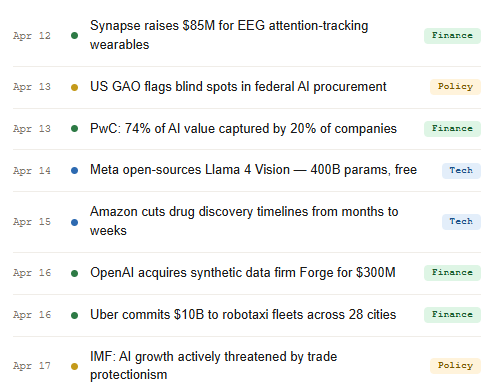
This Week at a Glance
-----------------------
Amazon Cut 18 Months of Drug Research Down to Weeks

Amazon has introduced a new AI research tool aimed at speeding up early-stage drug discovery, where timelines typically stretch 3 to 6 years.
Tasks that once took up to 18 months to produce around 300 drug candidates can now complete in weeks, before anything touches a lab.
Early-stage failure rates can exceed 90%. Finding better candidates sooner means fewer bad ones burning through lab budgets at all.
-----------------------
Uber commits $10B to robotaxis
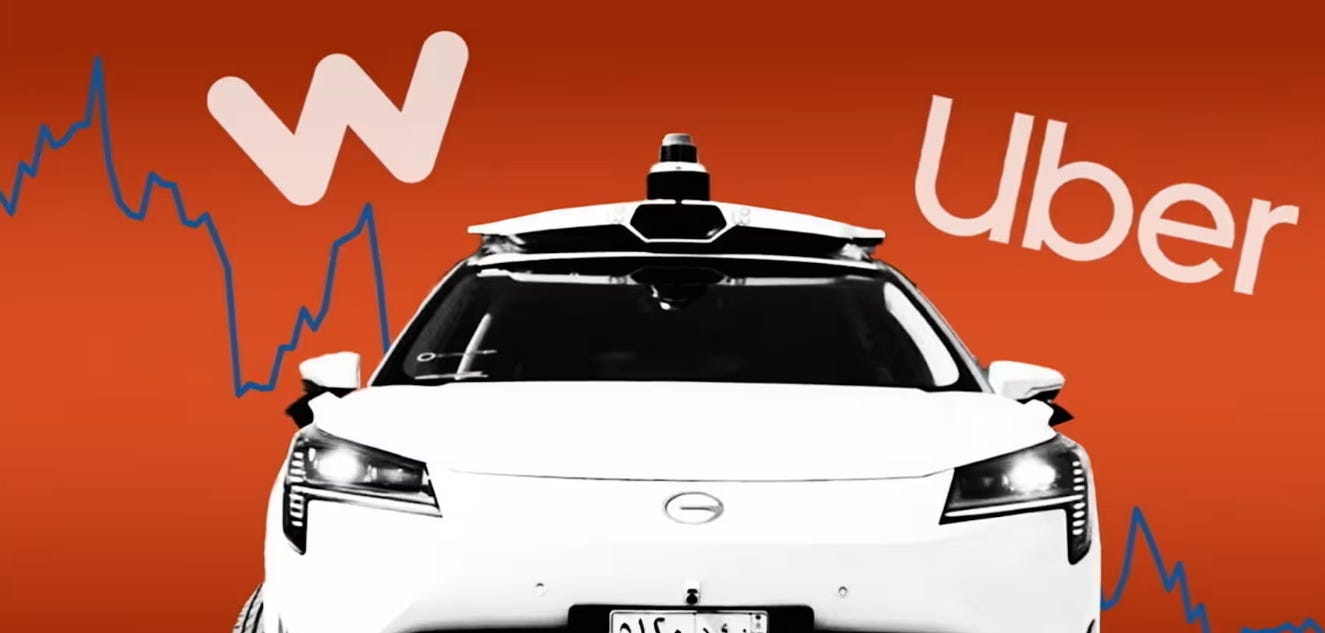
Uber is committing over $10 billion to robotaxis, marking one of its biggest strategic shifts toward autonomous mobility.
The investment includes more than $7.5 billion to purchase robotaxi fleets and roughly $2.5 billion in equity stakes in autonomous vehicle companies.
Uber is partnering with multiple players across the ecosystem, including Baidu, Rivian, and Lucid Motors, as it builds a marketplace of robotaxi operators rather than developing its own self-driving technology.
The company plans to roll out robotaxi services in at least 28 cities by 2028, with investments tied to partners hitting deployment milestones.
-----------------------
74% of AI's Value Is Going to 20% of Companies
PwC released a global AI adoption study this week. The number that sticks is not the biggest one.
74% of AI’s economic value is being captured by just 20% of companies. The rest are stuck in pilots that never ship.
The gap is not about which model they use. The leading companies are 1.7x more likely to have cross-functional responsible AI governance in place.
That flips the most common boardroom argument. Governance is not slowing these companies down. It is the reason they can safely automate decisions at all.
Quick Hits
OpenAI acquires Hiro
A personal finance tool that managed over $1B in user assets. Product shutting down April 20. OpenAI is building toward high-stakes consumer decisions, not just productivity. Read more
Stanford 2026 AI Index
Private AI investment hit $150B globally in 2025. US leads in models. China is closing the gap in research and patents fast. Read more
FBI investigates attack linked to OpenAI CEO Sam Altman
A suspect has been charged after allegedly throwing a Molotov cocktail at Sam Altman’s home and later threatening OpenAI’s office, with the FBI calling the incident planned and targeted.
Ticketmaster brings event discovery into ChatGPT
Ticketmaster is integrating recommendations directly into ChatGPT to personalise how users find events.
Andon launches a marketplace for AI agents
Andon Labs has introduced a platform where users can buy, sell, and deploy task-specific AI agents, including tools for coding, research, and automation workflows.
Apple plans AI smart glasses strategy
Apple is developing smart glasses focused on real-time assistance and lightweight design, aiming to compete with Meta’s Ray-Ban lineup.
DeepMind shares new model capabilities
Google DeepMind highlighted updates to its models, including improved reasoning and multimodal performance in its latest release.
Tweet of the Week
AI desktop apps are becoming real workspaces

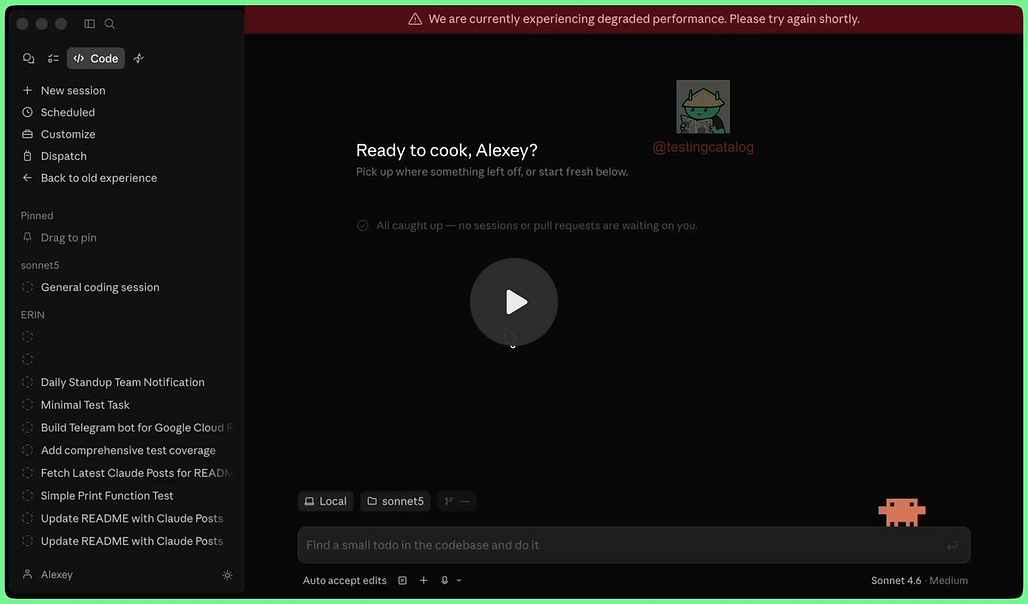
Anthropic and OpenAI are both updating their desktop apps, reportedly as early as next week.
The Anthropic version is said to bring multi-repository support and a cowork-style layout. These are starting to feel less like chat windows and more like actual development environments.
Before You Go
The PwC number will get screenshotted and shared a lot this week. The more interesting question it leaves behind is: what would it actually take for a company in the other 80% to close that gap?
It is probably not the model they are using.
See you next week! 👋